The first spark
I didn’t find this work. It found me.
And it took eleven years to finally say yes.
Looking back, I can see that creating order became a habit long before it became my profession.
For as long as I can remember, I have been drawn to creating calm and beauty.
I was always the person who noticed what could work better, what could feel easier,
and how a space could quietly support the people living in it.
I didn't know it then, but the small things I did naturally were already pointing me towards the work I do today.
The quirk and the spark
As a child, I spent summers helping my mother, who worked at a kindergarten, rearrange the closets there.
I cleaned toys, placed them neatly back on shelves, sharpened crayons, and checked that every marker still worked. Small things, done with care.
Around the same time, I helped prepare for weddings and celebrations on my uncle’s farm in Slovenia. My task was to set the tables—every piece of cutlery aligned, every napkin folded carefully, every plate placed with intention.
I loved it.
There was something deeply satisfying about transforming something ordinary into something welcoming. Creating order from chaos felt natural—almost like a quiet language I understood.
Long before I knew this could become my work, I was already doing it.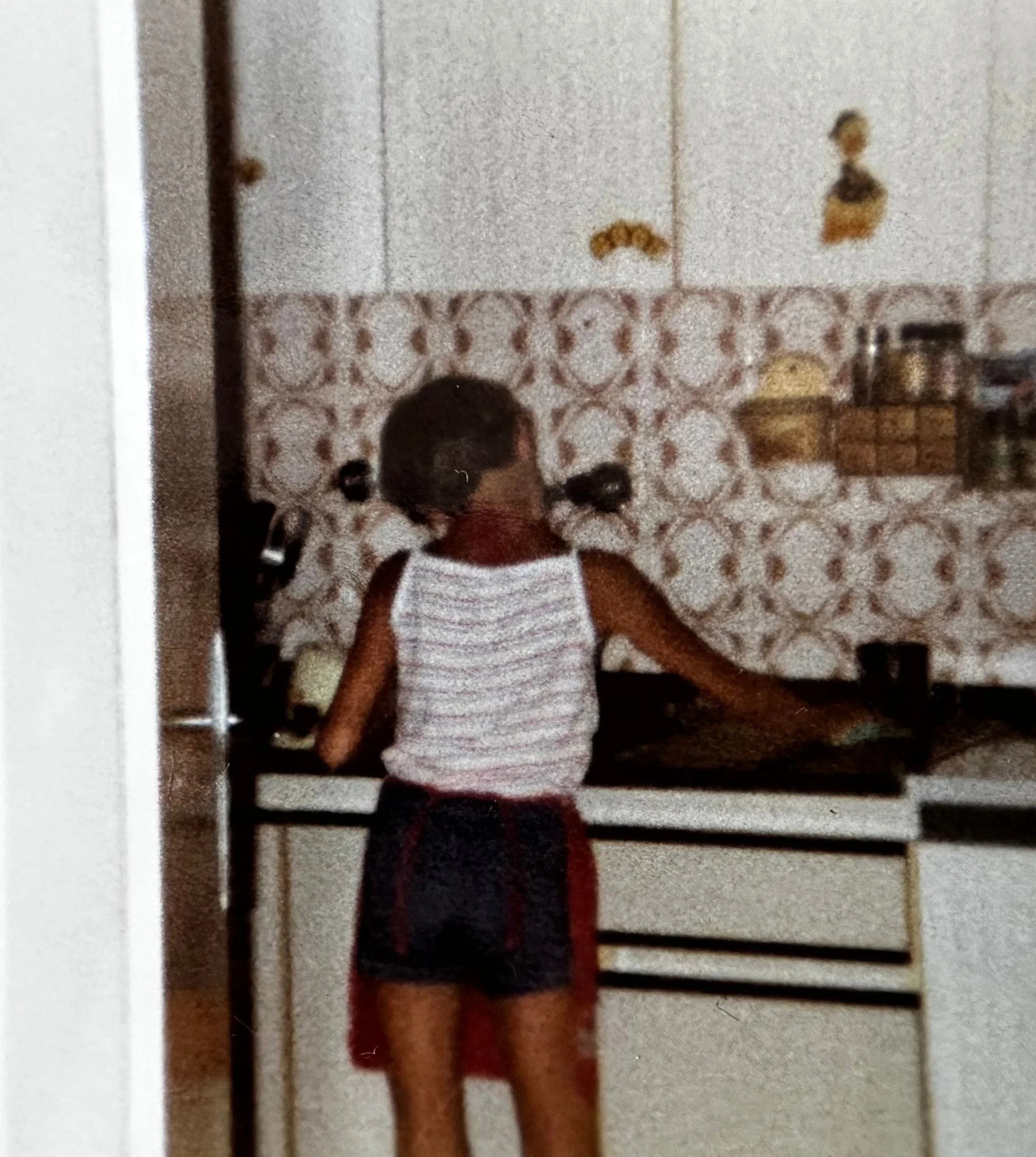
More than spaces
Although organizing has always been part of me, the deepest part of my work has always been people.
Across nearly thirty years of working with people, I discovered something important:
People grow when they feel seen.I did my best to encourage those who doubted themselves. I supported those who needed patience, and I saw potential where others sometimes saw limitations.
A person asking questions wasn't difficult. They were learning.
Someone struggling wasn't incapable. They simply needed support.
Creating order has never been just about objects.
It has always been about shaping an environment where people can breathe, feel capable again, and move forward with confidence.
The philosophy I had been living
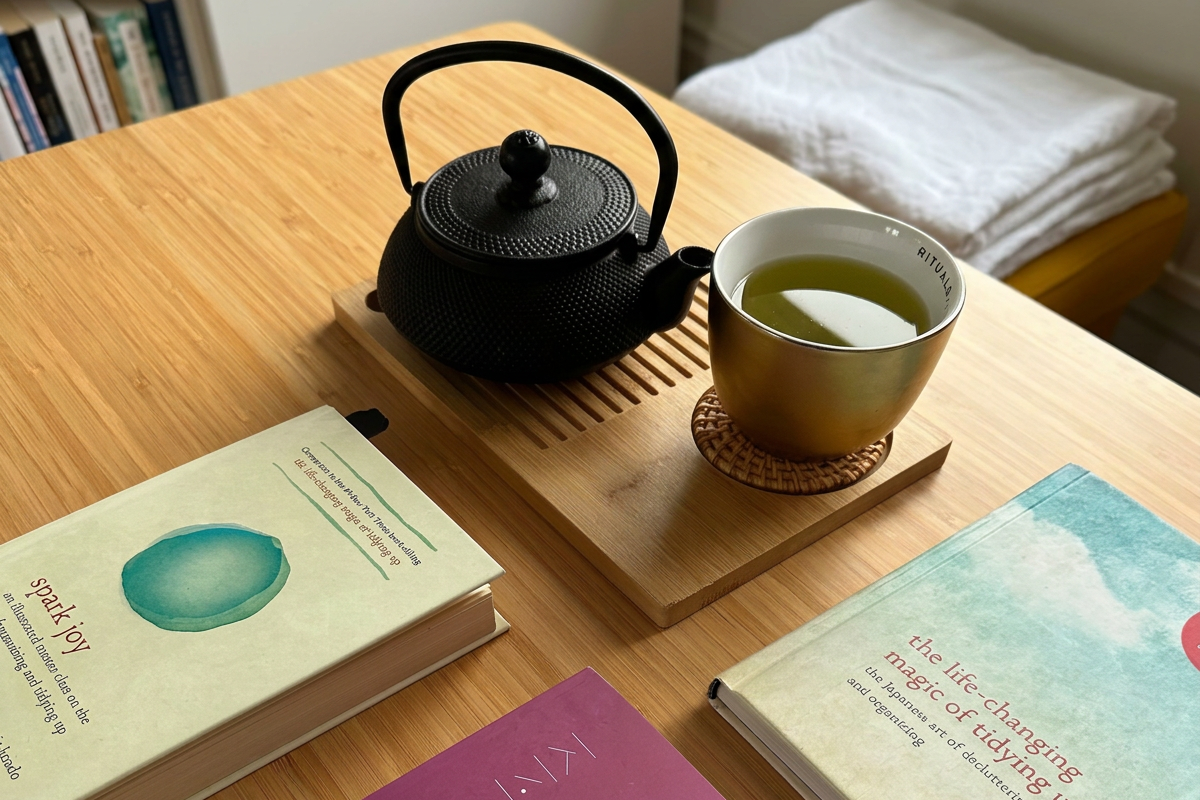
In 2015, while living in Slovenia, I discovered Marie Kondo's book.
Something clicked.
For the first time, I found a philosophy that described something I had been doing instinctively for years.
The KonMari® Method gave a name and structure to something I already understood.
Our belongings are not just things.
They hold our routines, memories, dreams, responsibilities, and the person we are becoming.
Still, it took time before I allowed myself to believe this could become my work.
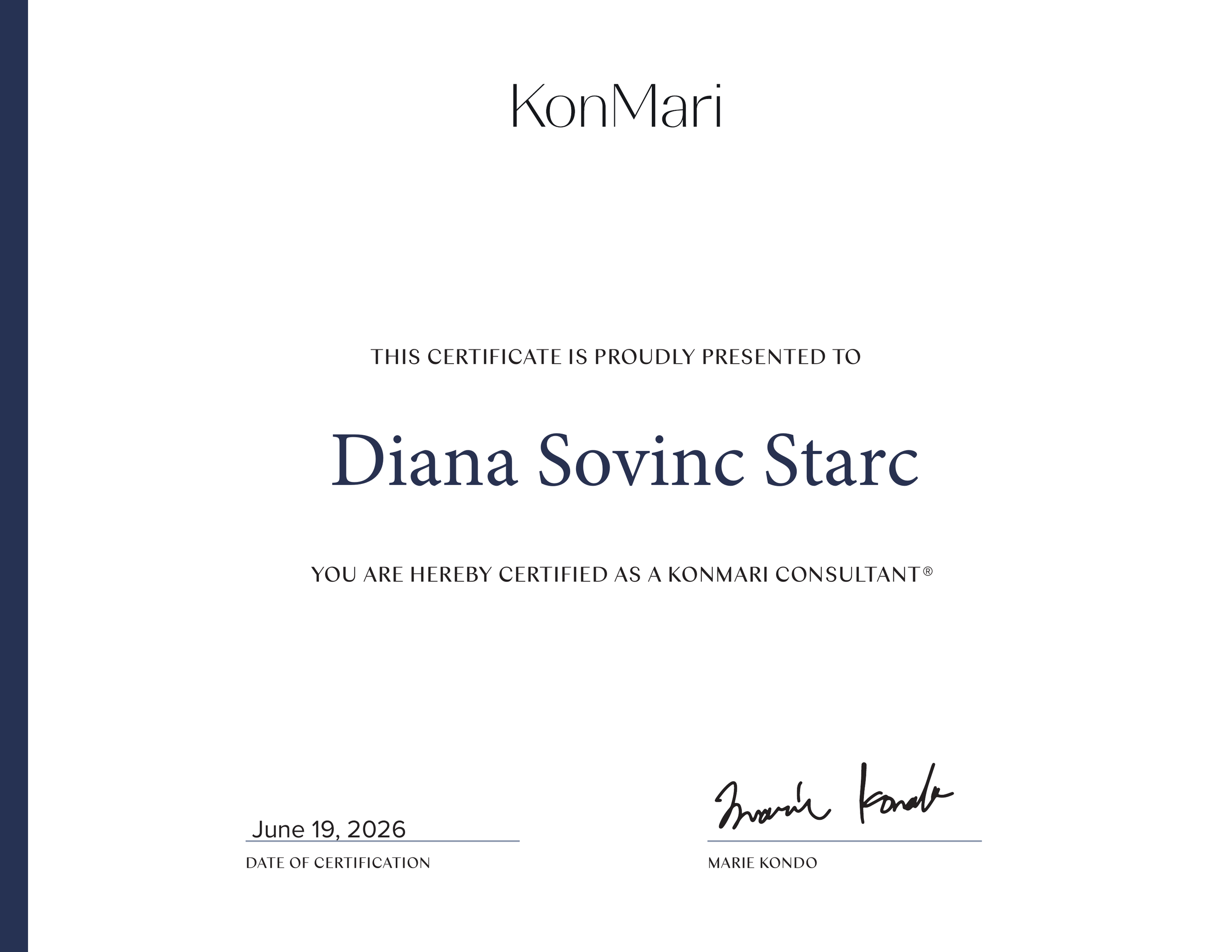
Before guiding others through the KonMari® Method, I completed my own Tidying Festival as part of the certification process.
My wardrobe was part of the first category: clothes.
Around ninety percent of it left—not because those clothes were bad or uncomfortable, but because they reflected a version of me I had already left behind.
I kept only the pieces that sparked joy, and instead of feeling unsettled by the empty space, I felt lighter.
Beginning with myself

The final category was sentimental items.
I let go of years of journals—including the daily journals I had written from the age of fourteen into my early twenties, which had travelled with me from Slovenia to Austria and eventually to the Netherlands, as well as more recent reflection journals.
It felt like putting down more than physical weight.
That experience taught me something I'll never forget.
We don't need to hold on to the past to honour it.
Our past habits, choices, and even our mistakes have already shaped us.
We don't need to keep every reminder of them for those experiences to remain part of who we are today.

Why I do this work
Today, I know this work isn't really about perfectly folded clothes or beautifully organized shelves.
Those are simply the visible results.
The deeper work is about helping people reconnect with themselves through their homes.
Because our homes hold so much more than belongings.
They hold our memories, our routines, our responsibilities, and sometimes the weight we've been carrying for years.
Why "Zen Within Living"?
I chose the name Zen Within Living because each part holds something I believe. It’s about a different kind of peace. Not the peace that comes from having everything figured out, but from creating a home and life that feel truly yours.
Zen is not perfection. To me, it is the quiet that appears when life feels a little clearer.
Within is where we turn to notice what truly matters to us — rather than what we think our lives or homes should look like.
Living is bringing that understanding into everyday life. The morning cup of tea. Preparing a meal. Welcoming someone home. Reading on the sofa. The ordinary moments our homes quietly hold.
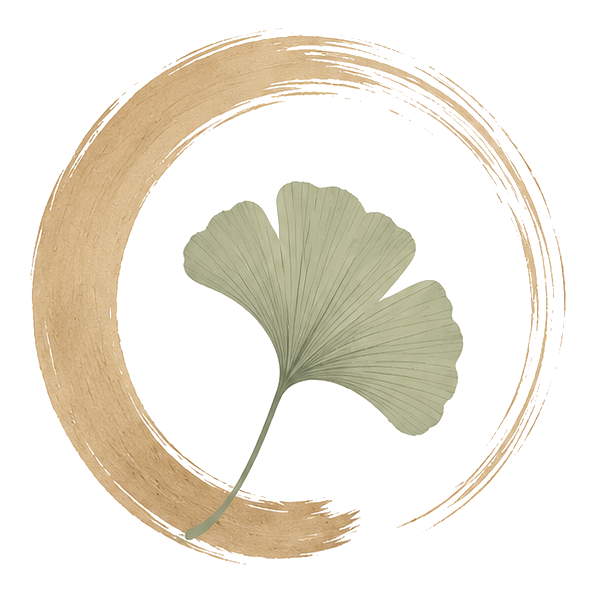
The logo carries the same idea.
The Ensō circle, traditionally drawn in a single brushstroke, represents presence, wholeness and the beauty of imperfection. It does not need to be perfectly closed or perfectly shaped to be complete.
Inside it sits a ginkgo leaf.
The ginkgo is one of the world's oldest surviving tree species — resilient, enduring and able to begin again. Its distinctive leaf often divides into two parts while remaining one whole, which is exactly what drew me to it: complexity and simplicity existing together.
For me, the two belong together.
The Ensō represents the space.
The ginkgo represents the life growing within it.
A quiet reminder that neither our homes nor our lives need to be perfect to feel whole.
Experience and qualifications
Certified KonMari® Consultant
Nearly 30 years of people-focused experience across hospitality, travel, recruitment, customer service, training, and aviation
Bachelor's degree in Economics
International experience living and working in Slovenia, Austria, and the Netherlands
Sessions available in English and Slovenian
I also understand Dutch and German, and can communicate conversationally in Serbo-Croatian